

FIFA Launches Review: Expansion Planned 48-team format for 2030 FIFA World Cup

Kathmandu: FIFA has officially begun studying a proposal that could dramatically change the future of international football expanding the 2030 FIFA World Cup from its planned 48-team format to a record-breaking 64-team tournament.
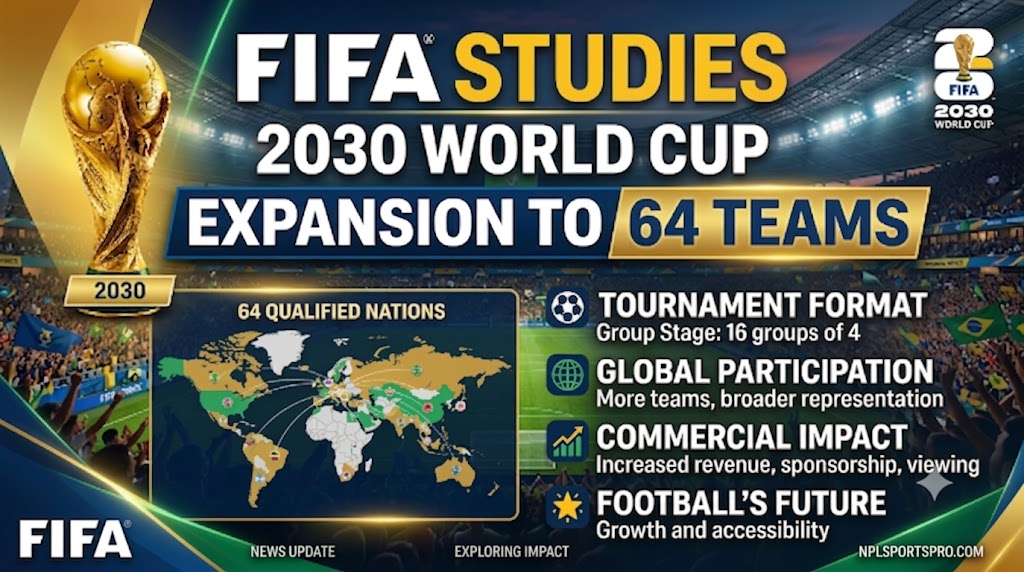
The global football governing body is examining the sporting, financial and logistical impact of the proposed expansion before making a final decision. The idea, which has attracted both support and criticism from different football stakeholders, could create the biggest FIFA World Cup ever if approved.
FIFA Launches Review Process for Historic Expansion Plan
The proposal to increase the number of participating nations at the 2030 World Cup has placed FIFA in the middle of a major football debate. The tournament is already scheduled to feature 48 teams, following the expansion approved for the 2026 FIFA World Cup.
However, FIFA officials are now analyzing whether another increase to 64 teams would be possible. The review will focus on several key areas, including match scheduling, travel demands, stadium availability, player workload, commercial benefits and the overall quality of competition.



A FIFA decision is expected after detailed evaluations are completed. The organization wants to understand whether the expanded format can maintain competitive balance while allowing more countries from different regions to participate on football’s biggest stage.
Why FIFA Is Considering a 64-Team World Cup
The main argument behind the expansion proposal is increasing global representation. Many football nations believe a larger World Cup would provide more opportunities for teams that rarely qualify for the tournament.
With more places available, countries from regions such as Africa, Asia, Oceania and North America could receive additional qualification opportunities. Supporters argue that this could help develop football worldwide by giving more nations experience against elite opponents.
The expansion could also create greater commercial opportunities for FIFA, broadcasters and sponsors. More matches would mean increased global viewership, additional sponsorship packages and higher revenues surrounding the tournament.
2030 World Cup Already Set to Be a Special Edition
The 2030 FIFA World Cup is expected to be one of the most unique editions in tournament history. The competition will celebrate the 100th anniversary of the FIFA World Cup, which began in Uruguay in 1930.
The tournament will be hosted across multiple countries, with Spain, Portugal and Morocco serving as the main hosts. Special opening matches are also planned in South America to honor the history of the first World Cup.
Because of its historical importance, FIFA is considering whether a larger tournament would make the centenary celebration even more memorable.
Concerns Over Tournament Quality and Player Workload
Despite the potential benefits, the proposed expansion has faced criticism from some football experts and officials.
Critics believe increasing the number of teams could reduce the overall quality of matches, especially if more teams with limited experience compete against the world’s strongest football nations.
There are also concerns about player fatigue. The modern football calendar is already crowded with domestic leagues, continental competitions and international fixtures. Adding more World Cup matches could increase physical pressure on players.
Football organizations have repeatedly raised concerns about protecting player health and maintaining a balanced schedule.
How a 64-Team Format Could Work
If FIFA approves the proposal, several format changes would be required. The current 48-team format includes 12 groups of four teams, followed by a knockout stage.
A 64-team tournament could require a completely new structure, possibly including:
- More group-stage matches
- Additional knockout rounds
- A longer tournament duration
- More host cities and stadiums
- Greater travel planning between venues
FIFA must carefully study whether the tournament can fit within the international football calendar without creating additional pressure on players and clubs.
Football World Reacts to Possible Expansion
The proposal has created mixed reactions across the football community. Smaller nations have welcomed the possibility of increased qualification chances, while some traditional football powers remain cautious about the impact on competition standards.
For emerging football nations, a 64-team World Cup could represent a historic opportunity. More teams would have the chance to compete at the highest level, attract investment and inspire future generations of players.
However, opponents believe FIFA must prioritize quality over quantity and ensure that the World Cup remains the most competitive football tournament in the world.
FIFA’s Biggest Decision Ahead of 2030
The decision on the 64-team proposal could become one of the most important choices in FIFA’s modern history. A successful expansion could reshape international football by creating more opportunities worldwide.
At the same time, FIFA must balance commercial growth with sporting quality and player welfare. The final decision will determine whether the 2030 World Cup becomes the largest celebration in football history or whether the current format remains the better option.
Football fans around the world will now wait for FIFA’s final announcement as the organization continues its evaluation of the ambitious 64-team World Cup proposal.